


Self-Assessment Indicators
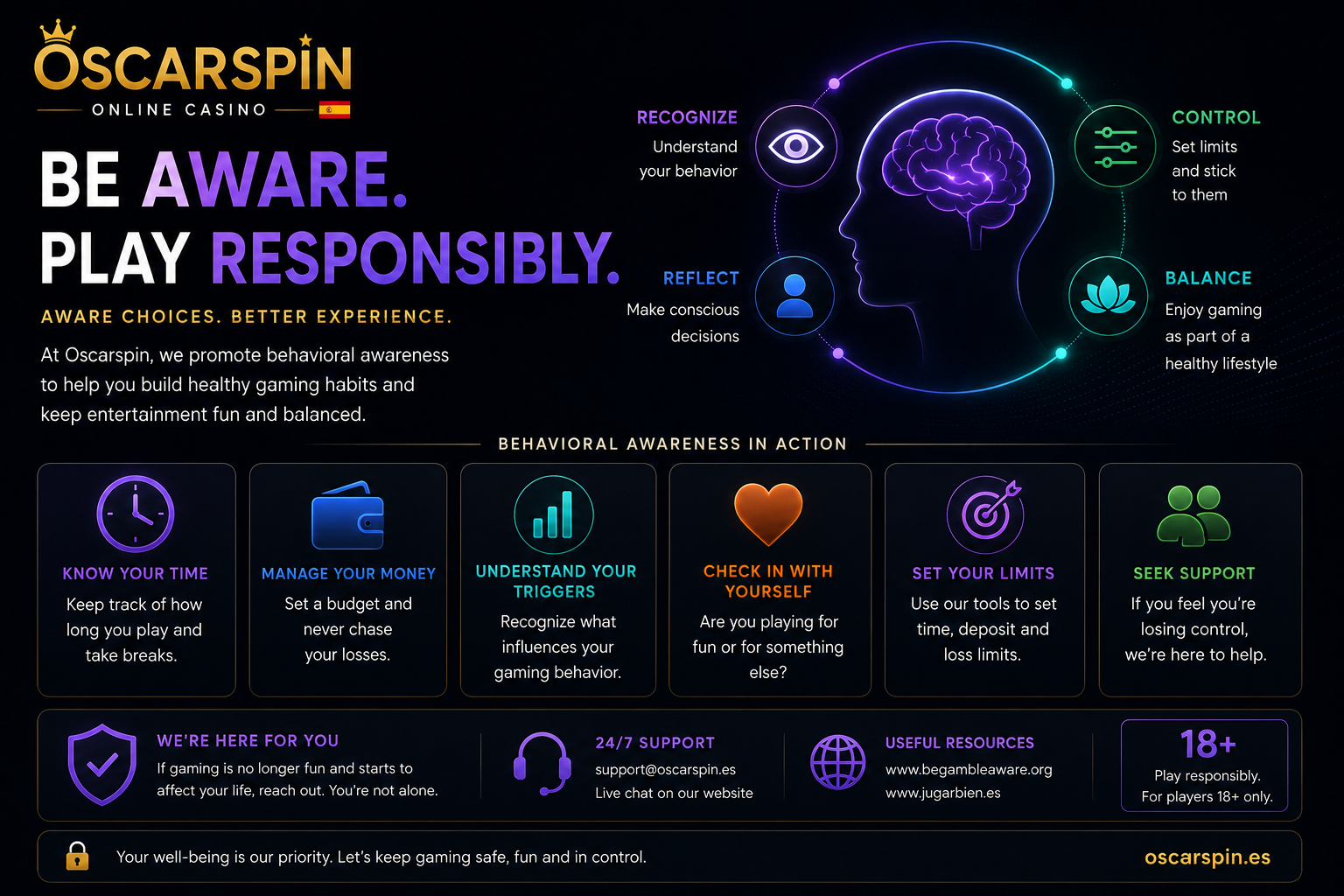
These are not symptoms of a condition. They are patterns worth noticing — quietly, honestly, without judgement.
- You regularly stay on the platform longer than you planned before opening it.
- You have deposited again during the same session to try recovering money you lost.
- Stepping away from the platform makes you feel restless, irritable or distracted.
- You have been vague or dishonest with someone about how much time or money you spend.
- Money that was meant for rent, groceries, bills or savings ended up in your platform wallet.
- You set a limit — time or money — and broke it before the session ended.
- Sleep, work, studies or relationships have been noticeably affected.
- You need bigger stakes or longer sessions to feel the same engagement you felt a month ago.
| Matches | What It Suggests |
| 0–1 | Low concern — stay aware, revisit periodically |
| 2–3 | Something shifting — review your habits and budget |
| 4–5 | Elevated signal — take a meaningful break |
| 6+ | Clear pattern — stop playing, consider talking to someone |
Three matches is not a verdict. It is a data point — and data points are useful only if you look at them.
Stabilization Procedure
When a session has gone sideways — more spent than planned, more time than intended, frustration where there should be enjoyment — this sequence interrupts the momentum.
- Stop. Close the app or browser tab. Not after the next round. Now.
- Move away from the screen. Phone in another room, laptop closed, chair pushed back. Physical distance matters more than willpower in the first few minutes.
- Cut the triggers. Mute platform notifications. Remove the home screen shortcut. Close related group chats. Every re-entry path you block during the pause makes the pause hold longer.
- Wait 15–30 minutes doing something else. Walk, cook, call a friend, listen to music. The adrenaline cycle needs time to wind down before you can think clearly again.
- Look at real numbers. Open your banking app. Check what you actually spent — the total, not the number your memory constructed. The gap between those two figures is information.
- Reset your limits. Before returning, set new boundaries based on what you genuinely can afford. Not what you want to afford — what losing entirely would not hurt.
The pull to go back during the pause is normal. It is the exact reason the pause exists — not evidence that the pause is wrong.
Financial Management Framework
Entertainment spending belongs in one place: the money left over after everything that actually matters is covered.
| Budget Layer | What It Covers | Available for Platform Use? |
| Fixed obligations | Rent, utilities, insurance, loan repayments | Never — these are non-negotiable |
| Daily essentials | Food, transport, phone, household needs | Never — life runs on these |
| Savings and reserves | Emergency fund, goals, irregular expenses | Never — this is your safety margin |
| Discretionary | Dining, hobbies, subscriptions, entertainment | Only a defined portion from here |
Rules that make this framework actually work:
- Decide the number before the month starts. Write it down. That number is a ceiling, not an opening offer for negotiation with yourself.
- Never borrow to play. Not from banks, not from apps, not from friends, not from credit cards. If playing requires debt, the budget is already broken.
- No recovery deposits. When the allocated amount is gone, the session is over. Adding more to chase losses is the budget collapsing in real time — you are watching it happen, not fixing it.
- Track every euro. Banking app categories, a notes file, a spreadsheet — method does not matter, habit does. Untracked spending is invisible spending, and invisible spending is where control quietly disappears.
- Do not play under emotional pressure. Tired, angry, lonely, stressed, bored — these are not reasons to open the platform. They are reasons to close it.
Control Mechanisms Overview
Some platforms offer built-in tools: deposit limits, session timers, cooling-off periods, self-exclusion. Whether Oscarspin provides these for Spanish users depends on the current interface version and account settings.
If built-in tools are available — set them while calm, before you need them. Deposit limits are the most effective because they prevent overspending before it starts. Session timers help only if you respect the alert instead of dismissing it. Self-exclusion is a structural barrier for moments when personal discipline is not enough — it is not failure, it is engineering.
If built-in tools are not available or insufficient, manual methods fill the gap:
- Phone alarm set to your planned session end time.
- Separate digital wallet loaded with only your entertainment budget — when it empties, the session ends.
- Remove saved payment methods after each session so re-depositing requires deliberate effort.
- Delete the app shortcut between uses to add friction before re-entry.
- External accountability — ask someone you trust to check in about time and spending.
Risk Awareness Messaging
These are signs that the balance between entertainment and problem is shifting. No medical terms, no labels — just observations worth taking seriously.
- Bet sizes have grown significantly without your entertainment budget growing alongside them.
- You think about the platform during meals, work or conversations — planning sessions, replaying outcomes, calculating what-ifs.
- You have hidden or downplayed your activity when someone asked.
- People close to you have noticed changes in your mood, availability or spending.
- Guilt or anxiety appears during or after sessions — not occasionally, but as a pattern.
- Money designated for specific purposes — rent, bills, family, savings — has been redirected.
- You have said “last one” or “five more minutes” multiple times in the same session and did not follow through once.
Any single item on this list is a reason to pause. Several together are not coincidence — they are a trend, and trends are easier to redirect at the beginning than at the end. If the patterns feel beyond what a checklist can address, talking to someone outside the platform — a friend, a family member, a professional support service — is the most effective next step available.